Monday, August 23, 2010

September Not Fiction Book Discussions

We continue our consideration of the theme of outliers, those people whose achievements exceed those of their peers, with When Everything Changed:The Amazing Journey of American Women from 1960 to the Present by Gail Collins.

Collins is herself an outlier--she was the first woman to hold the position of editorial page editor for the New York Times from 2001-2007. In the clear, humorous style with which she writes her current column for the Times' op-ed page, Collins describes the radical change in the lives of American women between 1960, when female doctors, lawyers, and engineers were rare and women needed their fathers' or husbands' permission to sign a lease or obtain credit, and Hillary Clinton's historic 2008 presidential campaign.

Using both statistics and oral history, Collins vividly depicts a rapidly changing world that young women today would not recognize. Malcolm Gladwell argues in Outliers: The Story of Success that outliers "are invariably the beneficiaries of hidden advantages and extraordinary opportunities that allow them to learn and work hard and make sense of the world in ways others cannot. The culture we belong to and the legacies passed down by our forebears shape the patterns of our achievement in ways we cannot begin to imagine." In our discussions, we will talk about what these advantages and opportunities were for American women, and what was fortuitous about the particular cultural moment of the 1960s.

We hope you will join the conversation: Tuesday, September 7, at 6:30 p.m. at Main Library; Thursday, September 23, at 11:00 a.m. at West Ashley Branch Library; or here on the blog.

And take a look at our book for October, Half the Sky: Turning Oppression Into Opportunity for Women Worldwide by Nicholas Kristof and Sheryl WuDunn (also available as a downloadable audio book), an inspiring companion read to When Everything Changed. Kristof and WuDunn explore how we can help women in African and Asia rise out of poverty and oppression to make remarkable contributions to their communities.

Friday, July 23, 2010

August Not Fiction Book Discussions

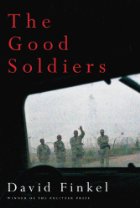
From a scholarly analysis and overview of the American Civil War, we move to an unmitigated on-the-ground account of the Iraq War--The Good Soldiers by Pulitzer Prize-winning Washington Post journalist David Finkel.

Between January 2007 and June 2008, Finkel spent eight months with the United States Army soldiers of the 2-16 Infantry Battalion in Iraq as they took part in the campaign know as "the surge." What is the true story of the surge? And was it really a success? These are the questions Finkel's unflinching third-person narrative poses to its readers as it follows Lieutenant Colonel Ralph Kauzlarich and the men and women in his charge through the violence, tension, and loss of armed conflict and its aftermath. Finkel writes, "my intent was to document their corner of the war, without agenda. This book, then, is that corner, unshaded." Can it be argued that even if the conflict these soldiers were involved in was impossible to win, the soldiers who fought in it can be seen as successful?

Finkel's premise is that the lives of these good soldiers are intrinsically valuable, that their valor in facing and surviving this war is remarkable. He shows rather than tells readers what Drew Gilpin Faust calls, in This Republic of Suffering: Death and the American Civil War, "the work of death," evoking the same questions and contradictions Faust argues were raised by the American Civil War: "the venerable problem of theodicy--of how and why God permits evil" (188); the "problem of the one and the many . . . How could the meaning of so many deaths be understood? And conversely, how could an individual's death continue to matter amid the loss of so many?" (262); and the resulting paradox of "[s]entimentality and irony [which] grew side by side in Americans' war-born consciousness" (264).

Many reviewers have written that The Good Soldiers will take its place as a classic story of war for all times. What do you think? We invite you to join the discussion: Tuesday, August 3, at 6:30 p.m. at Main Library; Thursday, August 19, at 11:00 a.m. at West Ashley Branch Library; or here on the blog.

Tuesday, June 22, 2010

July Not Fiction Book Discussions

In This Republic of Suffering: Death and the American Civil War by Drew Gilpin Faust, we learn that more than 600,000 soldiers lost their lives in the American Civil War, and that an equivalent number of today's population would be six million. As we approach the 150th Anniversary of the American Civil War, Faust, president of Harvard Universiy and Lincoln Professor of History, helps readers understand that this unprecedented loss of life was the defining characteristic of the war, for individuals and for the nation. Surveying both the practical--how to account for and bury the dead--and the philosophical--how to reconcile abrupt and violent death with with a tradition of dying a Good Death reunited with a loving God, Faust argues that "[d]eath created the modern American union--not just by ensuring national survival, but by shaping enduring national structures and commitments."

Within a month of its publication in January 2008, This Republic of Suffering sold 35,000 copies and reached 7th on the New York Times nonfiction bestseller list and 30th on the Amazon.com bestseller list, according to an article in The Boston Globe--remarkable sales for an academic title about a grim historical subject. What could account for readers' interest? It could be that Faust recently had been appointed president of Harvard, the first woman to serve in that position. However, it also could be that the book provides a humanistic view of the American Civil War, not just an account of who won and why, but insight into the universal topic of what Faust calls "the work of death." In her Preface she writes, "It is work to die, to know how to approach and endure life's last moments. Of all living things, only humans consciously anticipate death: the consequent need to choose how to behave in its face--to worry about how to die--distinguishes us from other animals. The need to manage death is the particular lot of humanity." She offers insight into the irony that a war fought over the South's bid to secede from the United States created a stronger, more centralized union. We all, North and South, were united by the sacrifice of that war.

A theme for this year's discussions is Malcolm Gladwell's theory of success outlined in his book Outliers: The Story of Success. In what ways had our young nation practiced "the work of death"? And in what ways was it the right cultural moment for our union to succeed?

We hope you will join our discussion--Tuesday, July 6, at 6:30 p.m. at Main Library; Thursday, July 22, at 11:00 a.m. at West Ashley Branch Library; or here on the blog--of this original work that Newsweek calls "one of those groundbreaking histories in which a crucial piece of the past previously overlooked or misunderstood, suddenly clicks into focus."

Wednesday, May 5, 2010

June Not Fiction Book Discussions

We invite you to join us for a discussion of Remarkable Creatures: Epic Adventures in the Search for the Origins of Species by Sean B. Carroll. Carroll, Professor of Molecular Biology and Genetics and an Investigator with the Howard Hughes Medical Institute at the University of Wisconsin, tells the stories of the most dramatic expeditions and important discoveries of the last two centuries of natural history, from the epic journeys of pioneering naturalists like Charles S. Darwin to the microscopic work of scientists in laboratories who investigate molecular genetics.

The publication of Carroll's book marks the anniversaries of several milestones in natural history and evolutionary science: Charles Darwin's 200th birthday, the 150th anniversary of the publication of his On the Origin of Species, the 150th anniversary of a paper presented by Charles Darwin and Alfred Wallace to the Linnean Society in London on the theory of natural selection, the 100th anniversary of Charles Walcott's discovery of the remarkable animals of the Burgess Shale, and the 50th anniversary of Mary and Louis Leakey's first ancient hominid find.

In introducing his book, Carroll says, "We will encounter many amazing creatures of the past and present, but the most remarkable creatures in these stories are the men and women. They are, without exception, remarkable people who have experienced and accomplished extraordinary things. . . . The people in these stories followed their dreams--to travel to far-away lands, to see wild and exotic places, to collect beautiful, rare, or strange animals, or to find the remains of extinct beasts or human ancestors. Very few started out with any notion of great achievement or fame. Several lacked formal education or training. Rather, they were driven by a passion to explore nature, and they were willing, sometimes eager, to take great risks to pursue their dreams. Many faced the perils of traveling long distances by sea. Some confronted the extreme climates of deserts, jungles, or the Arctic. Many left behind skeptical and anxious loved ones, and a few endured years of unimaginable loneliness. Their triumphs were much more than survival and the collecting of specimens from around the world. A few pioneers, provoked by a riot of diversity beyond their wildest imaginations, were transformed from collectors into scientists. They posed and pondered the most fundamental questions about Nature. Their answers sparked a revolution that changed, profoundly and forever, our perception of the living world and our place within it." In our discussions, we will consider the qualities and experiences that these remarkable people had or have in common. Was or is their success due, as Malcolm Gladwell suggests in his book Outliers: The Story of Success, to opportunity, to time spent practicing their discipline, and to being born in the right cultural place and time? Is there some other essential quality, such as curiosity or openness to seeing the world in a new way, that underlies their experience?

You can join the conversation Tuesday, June 1, at 6:30 p.m. at Main Library, Thursday, June 17, at 11:00 a.m. at West Ashley Branch Library, or here on the blog.

Read about some species' remarkable adaptive changes in Carroll's monthly feature Remarkable Creatures for the New York Times Science Times.

Wednesday, April 7, 2010

May Not Fiction Book Discussions


Journalist and recreational runner Christopher McDougall's epic adventure Born to Run: A Hidden Tribe, Superathletes, and the Greatest Race the World Has Never Seen began with a simple question: "Why does my foot hurt?" Finding the answer led him through the dangerous terrain of Mexico's Copper Canyon in search of the running secrets of the reclusive Tarahumara Indians, into the competitive and quirky world of ultrarunning, to consultations with sports medicine experts and high-tech science labs at Harvard, and ultimately to the race of his life. With humor, enthusiasm, and humility, McDougall argues that we are all born to run. In an interview with his publisher, McDougall says, "I think ultrarunning is America's hope for the future. Honestly. The ultrarunners have got a hold of some powerful wisdom. You can see it at the starting line of any ultra race. I showed up at the Leadville Trail 100 expecting to see a bunch of hollow-eyed Skeletors, and instead it was, 'Whoah! Get a load of the hotties!' Ultra runners tend to be amazingly healthy, youthful and - believe it or not - good looking. I couldn't figure out why, until one runner explained tht throughout history, the four basic ingredients for optimal health have been clean air, good food, fresh water, and low stress. And that, to a T, describes the daily life of an ultrarunner. They're out in the woods for hours at a time, breathing pine-scented breezes, eating small bursts of digestible food, downing water by the gallons, and feeling their stress melt away with the miles. But here's the real key to that kingdom: you have to relax and enjoy the run" (http://www.randomhouse.com/) A reviewer for Booklist calls Born to Run "slyly important." What could this story about a sports event for outliers of the running world have to say to the average reader?

To catch up with Christopher McDougall and Caballo Blanco, read their interviews on the Outside blog: http://outside-blog.away.com/blog/2010/02/born-to-run-christopher-mcdougall-interview.html and http://outside-blog.away.com/blog/2010/03/born-to-run-caballo-blanco-interview.html.

To learn more about a new nonprofit, Norawas de Raramuri, or Friends of the Tarahumara, that works to support local and international foot races that will celebrate and encourage the Raramuri running culture and benefit Raramuri communities, visit http://www.norawas.org/.

Monday, April 5, 2010

April Not Fiction Book Discussions


One of the most inspiring books we have read for our Not Fiction Book Discussions is Mountains Beyond Mountains by Pulitzer Prize-winning author Tracy Kidder, the story of Dr. Paul Farmer and his quest to provide free, dignified health care for people in Haiti and beyond with his nonprofit organization Partners In Health. In his new book, Strength in What Remains, Kidder tells the story of a young man who worked for Farmer at Partners In Health, a hero for our times. Deogratias, a medical student from Burundi, survived civil war and genocide in Burundi and Rwanda and fled to America, where he found himself homeless, plagued by nightmares of the violence he had witnessed, and with no English. The story of how he met strangers who would help him find his way to medical school and of how, with great hope and forgiveness, he established a medical clinic in Burundi, "transcends the moment and becomes as powerful and compelling as those journeys of myth" (Jonathan Harr). Kidder writes, "When Deo first told me about his beginnings in New York, I had a simple thought: 'I would not have survived.'" What were the ingredients in Deo's almost mythical ability not just to survive but to transcend? Providence? Character? Experience? The coincidence of meeting the right people at the right time? And what can we learn from this great story of our times?
We invite you to join our discussions: Tuesday, April 6 at 6:30 p.m. at Main Library; Thursday, April 22 at 11:00 a.m. at West Ashley Branch Library; or here on the blog.
To learn more about Partners in Health, Paul Farmer's nonprofit, visit http://www.pih.org/.
To learn more about Village Health Works, Deogratias' nonprofit, which has served more than 28,000 patients since opening its doors in December 2007, visit http://www.villagehealthworks.org/.

Tuesday, February 23, 2010

Time change for Main Library Not Fiction Book Discussions

Charleston County Public Library will cut its operating hours to compensate for budget shortfalls caused by the continuing economic downturn. The Library’s Board of Trustees unanimously decided to close the five Regional Libraries on Sundays and close the Main Library one hour earlier at 8 p.m., beginning April 1st. The Main Library currently stays open until 9 p.m. Mondays-Thursdays. By closing one hour earlier, at 8 p.m. on those days, it makes the closing time at Main coincide with the current 8 p.m. closing already in effect at the five Regionals and three large branch libraries. Main is open from 9 a.m.-6 p.m. on Fridays and Saturdays and will remain open from 2-5 p.m. on Sundays. (For more information about the library's reduced hours, please click here.)

Consequently, the Not Fiction Book Discussion meetings at Main Library will be rescheduled for 6:30 p.m. beginning with the April 6 meeting.